A living archive
People. Ideas. A shared history.
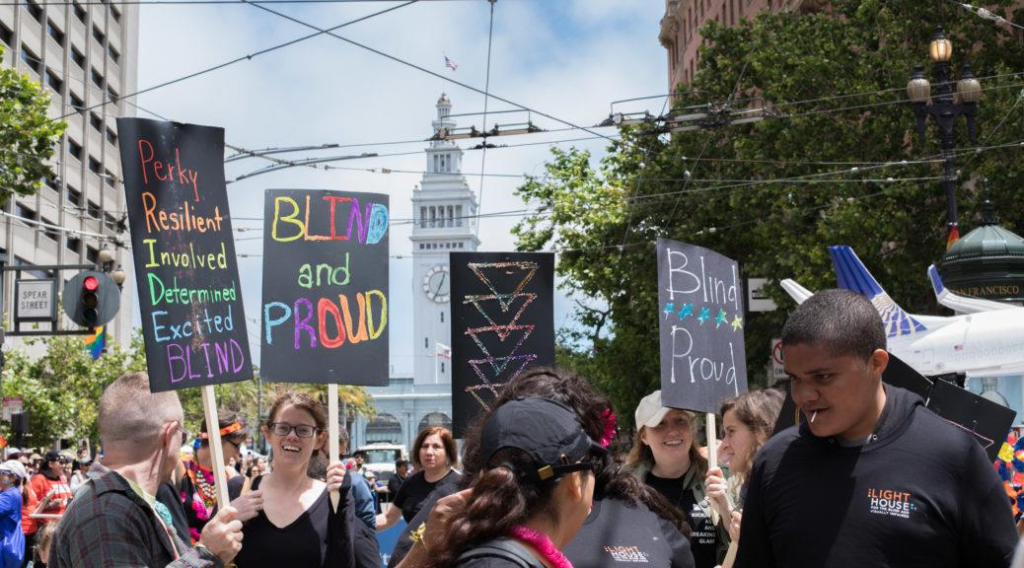
BSAN’s story begins with blind people making room to talk about our bodies, relationships, sexuality, and consent. It grew through workshops, friendships, university collaborations, living-room gatherings, tactile models, and conversations that reached far beyond the Bay Area.
This history is incomplete and growing. If you would like to suggest changes, edits, corrections, or additions, please reach out to info@sexualityaccessnetwork.org.
About the sources
This account draws on BSAN’s August 30, 2025 history appendix and board welcome materials, together with the community’s plans for this website. It records work that happened at different times and under different names. Historical collaborators and roles are part of that record; this is not a current staff or services directory.
Explore the chapters
Follow the timeline for the highlights. Open any chapter for its full story, names, and context.
Jump to a chapter
- 2016 to 2018: The LightHouse years
- 2017 onward: Blind people shaping education
- 2019: Tactile models and the UC Berkeley collaboration
- 2019 to early 2020: Living rooms and Blind Positive Sex Ed
- 2020 to 2021: A wider community online
- Sharing leadership and responsibility
- 2021 to 2023: Changing capacity, continuing relationships
- 2023 to 2024: Becoming the Blind Sexuality Access Network
- 2024 to 2025: Documenting a shared direction
- The people who built the work
- The next chapter and your contributions
Chapter 01
2016 to 2018: The LightHouse years
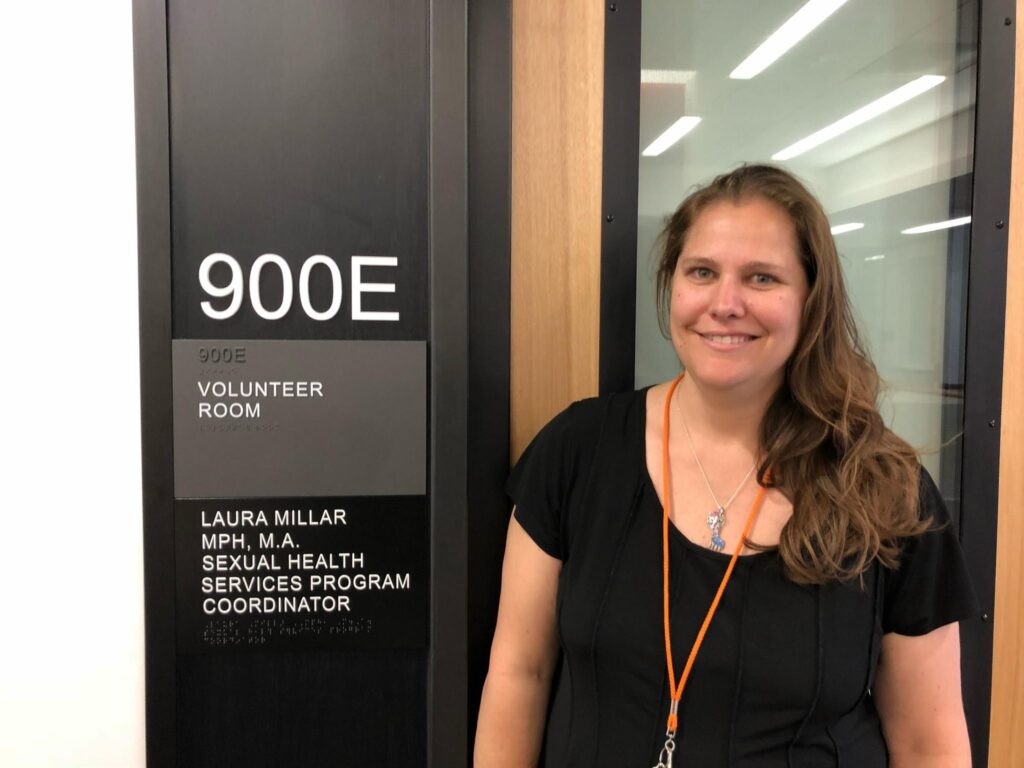
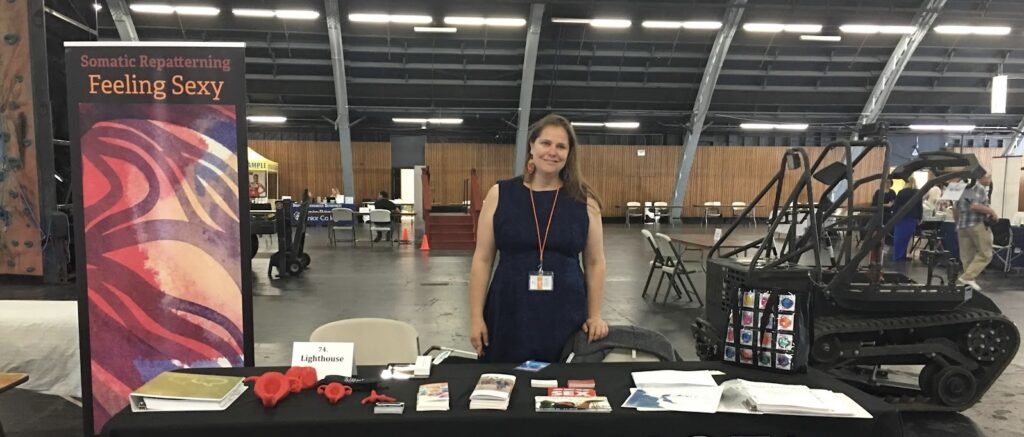
In 2016, Lisamaria Martinez, then Director of Community Services at the San Francisco LightHouse for the Blind and Visually Impaired, hired Laura Millar as Sexual Health Services Program Coordinator. With support from Bryan Bashin and Scott Blanks, the program made space for sexuality and bodily autonomy within blindness services.
Read more: 2016 to 2018: The LightHouse years
The conversations were wide-ranging: dating, relationships, sexually transmitted infection prevention, condom use, reproductive justice, kink, and parenting. Sessions used plain language and drew on lived experience. Blind people could ask questions about the lives we wanted to lead, including pleasure, intimacy, boundaries, and the effects of ableism.
Bobbi Pompey first took part as a participant and then began co-teaching with Laura. Bobbi’s positive philosophy of blindness and Laura’s sex-positive approach strengthened one another. Jim Barbour also joined, bringing his commitment to blind people’s agency and lived expertise. Relationships formed through this work later helped sustain the grassroots network.
The LightHouse Sexual Health Services Program ended in 2018. The questions, skills, and connections people had developed continued beyond the program. Its ending helped make clear why the work needed community relationships and a structure that could survive changes within a single institution.
Chapter 02
2017 onward: Blind people shaping education
The emerging network was also asking who gets to write sexuality education for blind people. Laura’s experience reviewing existing educational materials sharpened questions about whose knowledge was treated as authoritative, how consent was taught, and whether blind people’s pleasure and autonomy were taken seriously.
Read more: 2017 onward: Blind people shaping education
Those questions helped shape a lasting commitment: blind people should participate in choosing the questions, creating materials, teaching, and making decisions. Accessible formatting matters, and so does the philosophy beneath the information.
Beginning in 2017, people who would become part of BSAN guest lectured and joined panels in San Francisco State University’s Program in Visual Impairments. The program prepares teachers of students with visual impairments and orientation and mobility specialists. These sessions brought blind people’s experiences into the education of future professionals.
Topics included ableism in education and dating, consent and bodily autonomy, blind-positive sexuality education, and trauma-informed practice. Consent was discussed as a responsibility professionals model in everyday interactions, including asking before touching, explaining an activity, and respecting someone’s refusal.
Faculty collaborators named in BSAN’s history include Kathy Abrahamson, Lee Staub, Yue-Ting “Ting” Siu, Adam Graves, and Bobbi Pompey. Their involvement helped connect community knowledge with professional preparation.
Chapter 03
2019: Tactile models and the UC Berkeley collaboration
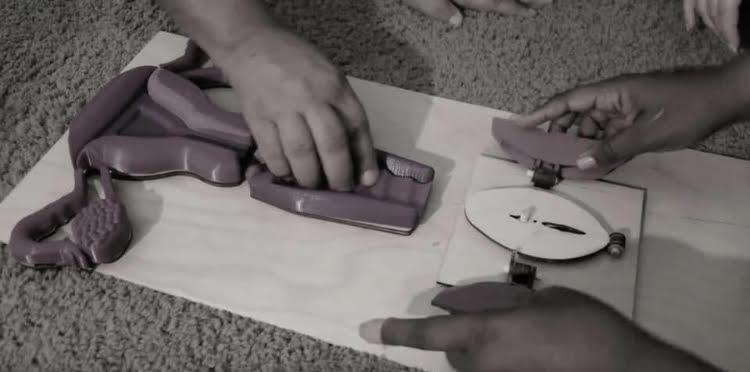
In spring 2019, Laura Millar and Jim Barbour spoke with students in Karen Nakamura’s Inclusive Design Lab at UC Berkeley. They described gaps in accessible sexual health education and the need for anatomy models that blind learners could explore through touch.
Read more: 2019: Tactile models and the UC Berkeley collaboration
Franchesca “Franky” Spektor, Annalise Kamegawa, and Hailey Windsor partnered with Laura and Jim on Gena, an open-source design initiative. Support came through the CITRIS Invention Lab’s Making Together program and the Jacobs Institute for Design Innovation.
The project explored layered, modular, textured anatomy models. Early work included wood, 3D-printed parts, and silicone prototypes. The aim was to make models that people could handle, take apart, and use to understand connections between internal and external anatomy, with attention to inclusive representations and affordable production.
Blind adults joined hands-on sessions in Laura’s home and other Bay Area spaces. They tested textures, shapes, and how pieces fitted together. The models also became teaching tools within the sessions, opening conversations about anatomy, reproductive health, pleasure, and consent.
Community participation shaped the work from the beginning. The collaboration reinforced the importance of blind people as co-creators and decision-makers. It also raised a practical question: when a student project ends, how will the people who helped create the tools continue to access and develop them?
Chapter 04
2019 to early 2020: Living rooms and Blind Positive Sex Ed
During 2019 and early 2020, informal gatherings brought together Laura, Jim, Bobbi, Lisamaria, Franky, and others from their networks. Meetings often took place in living rooms, including Laura’s home in Alameda. People kept refining prototypes, exploring Braille placement, sharing experiences, and imagining accessible sexuality education.
Read more: 2019 to early 2020: Living rooms and Blind Positive Sex Ed
These gatherings connected the tactile model work with teaching, advocacy, and local organizing. People discussed how ableism and silence about sexuality appeared in blindness services, classrooms, and community spaces. They considered what it would take to make consent part of an institution’s everyday culture.
Some participants also brought lessons from Navigating Consent, a Bay Area program facilitated by educators including Dossie Easton and Willowkat. Conversations about power, accountability, and support for survivors informed the group’s approach. The pandemic interrupted the in-person training pathway, while those ideas continued to influence the work.
The group embraced the name Blind Positive Sex Ed. It named the connection people were making between a positive philosophy of blindness, affirming sexuality education, consent, and justice.
Chapter 05
2020 to 2021: A wider community online
When the pandemic interrupted in-person gatherings, Blind Positive Sex Ed moved into virtual spaces. A virtual open house introduced the project to a wider community and invited volunteers into three working groups: Education and Curriculum; Design and Model Making; and Project Management and Community Engagement.
Read more: 2020 to 2021: A wider community online
Clubhouse became an important place to gather. People joined from across the United States and internationally to discuss experiences and questions that often had little space elsewhere. Topics included consent in blind communities, dating and ableism, pleasure and disability, reproductive justice, and talking with children about sex as a blind parent.
The conversations expanded the work through participants’ own knowledge and experience. People could contribute a question, a practical skill, a disagreement, a story, or a professional perspective. Education and community connection developed together.
The work also reached people through conference presentations, podcasts, interviews, and guest teaching. The history records appearances in Association for Education and Rehabilitation of the Blind and Visually Impaired, California Transcribers and Educators of the Blind and Visually Impaired, and National Federation of the Blind spaces.
Chapter 06
Sharing leadership and responsibility
During the pandemic, Lisamaria Martinez and Bobbi Pompey formally joined Laura Millar and Jim Barbour in the leadership team, recognizing work they had already been doing. The network depended on many kinds of contribution, including facilitation, organizing, writing, design, technical knowledge, and care for one another.
Read more: Sharing leadership and responsibility
Janay Anthony championed distributive leadership: sharing responsibility and decision-making across people. This became an important part of BSAN’s planning. It linked the group’s values to practical questions about who makes decisions, whose work is recognized, and how a volunteer network can respect people’s capacity.
Chapter 07
2021 to 2023: Changing capacity, continuing relationships
As pandemic conditions changed, members balanced jobs, study, caregiving, and other commitments. Public activity slowed. Relationships, mutual support, selected projects, and professional conversations continued through these quieter periods.
Read more: 2021 to 2023: Changing capacity, continuing relationships
Anneliese Knop joined the leadership, bringing her perspective as a blind mental health professional, writer, and advocate. Her contributions helped connect mental health and trauma-informed approaches with the network’s work on sexuality, consent, and organizational planning.
Laura and Anneliese worked with Jacqueline Steiger to develop an accessible discussion guide based on A. V. Flox’s Disrupting the Bystander: When #MeToo Happens Among Friends. Pilot conversations explored how blind communities could respond to harassment and harm, support survivors, and strengthen accountability.
The history records that availability of the book interrupted this project. The work nevertheless added to a larger question running through BSAN’s history: how do conversations about consent become shared expectations and practices within communities?
Chapter 08
2023 to 2024: Becoming the Blind Sexuality Access Network
As the work grew beyond sexuality education, the group reconsidered its name. Bobbi Pompey championed Blind Sexuality Access Network, placing access at the center: access to information, pleasure, agency, justice, and belonging.
Read more: 2023 to 2024: Becoming the Blind Sexuality Access Network
The change from Blind Positive Sex Ed to BSAN developed during the 2023 to 2024 period. The new name made room for the broader connections among education, community organizing, research, professional practice, and policy. This growing history welcomes help with the dates and details of that transition.
The group also worked to clarify its mission, values, and approach to shared leadership. The goal was to keep blind people’s voices and decisions central as the work took new forms.
Chapter 09
2024 to 2025: Documenting a shared direction
The board materials assembled in 2025 brought together BSAN’s history, values, governance ideas, and aspirations. They documented shared leadership roles and planning around incorporation, fundraising, and community engagement.
Read more: 2024 to 2025: Documenting a shared direction
The materials identified future directions including a community-led needs assessment, further work on the bystander discussion guide, wider access to tactile models, facilitator training, and partnerships. These were directions for development, shaped by the people and capacity available.
The planning connected five areas of sexual health promotion: developing personal skills, creating supportive environments, strengthening community action, building healthy public policy, and reorienting sexual health services. Together, they link access to information with the conditions that let people use it.
Chapter 10
The people who built the work
Laura Millar, Lisamaria Martinez, Bobbi Pompey, Jim Barbour, and Anneliese Knop helped shape the network’s leadership across different stages. Their work was joined by many people who taught, made models, organized, facilitated, edited, asked questions, and shared experiences.
Read more: The people who built the work
The history recognizes Leslie Turner Dickson, Elizabeth Greenblatt, Danielle Montour, Marco Salsiccia, Cory Walker, George Stern, Eva Favreau, Sara and Steven Erb, Robert Jaquiss, Cricket Bidleman, Matt Hackert, Robin Mandell, and Conner Scott Gardner. It also acknowledges Cindy Bennett, Janay Anthony, and Gareth Storm, alongside the LightHouse and university collaborators named above.
A list cannot capture every contribution. Participants who came to one workshop, offered a correction, tested a prototype, or spoke honestly in a difficult conversation also influenced what the network became. Missing names and contributions are part of what this living history needs to recover.
Chapter 11
The next chapter and your contributions
BSAN’s group activity is currently on hold. We are building on its grassroots history and developing this website to expand the network and the conversation about blindness, sexuality, relationships, and consent.
The next chapter can include people finding one another, sharing useful materials, recommending workshops, bringing new questions, and preserving what has already been learned. The community pages invite those contributions while individual resources and profiles await review.
This history is incomplete and growing. If you would like to suggest changes, edits, corrections, or additions, please reach out to info@sexualityaccessnetwork.org.
You can also share a story, photo, or history correction or explore ways to contribute to the community. Please tell us how you would like to be credited and what you agree may be made public.