What would you want another blind person to know about this resource or provider? You can share what worked, describe a barrier, or suggest a change. Giving a score is optional.
Read published reviews · Want to know more about our six-dot Braille rating system?
Your experience helps the community. BSAN reviews submissions before publication and respects the publishing choice you make below. Your email stays private.
Recommending something new? Use the separate Suggest a Resource form.
Want a conversation? Choose a resource under published reviews, then use its community comment section. You can ask a question or respond to someone without giving a rating.
Write a review or share feedback
If the title field is blank, enter the name of the resource or provider.
Thank you for sharing your experience.
BSAN checks your sharing preference before publishing a review. Only published reviews that include a numeric rating contribute to the score.
Published community reviews
XOXO Doula. 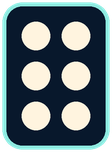 6 out of 6 dots (1 review) Read the review.
The Fight to Keep Playboy in Braille. 6 out of 6 dots (1 review) Read the review.
Top Ten Things Sighted People Never Tell Us About Kissing. 6 out of 6 dots (1 review) Read the review.
The Blind Girls’ Guide to Puberty. 6 out of 6 dots (1 review) Read the review.
Relationships and Sexuality Education handbook. 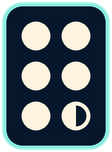 5.5 out of 6 dots (1 review) Read the review.
Consent Academy. 6 out of 6 dots (1 review) Read the review.
C Is for Consent. 6 out of 6 dots (1 review) Read the review.
Blindness and Sexuality. 6 out of 6 dots (1 review) Read the review.
How our six-dot Braille rating system works
A Braille cell has two columns of three dot positions. BSAN uses that familiar shape for our community rating, called a Dot Vote. A filled dot is one point. A half-filled dot is half a point. Every score is written beside the cell, so you can read or listen to it.
What makes a resource blind-positive, sex-positive, and accessible?
- Blind-positive. Does it take blind people’s knowledge seriously and respect our right to make decisions about our own bodies and relationships? Look for ways blind experience shapes the advice or the service.
- Sex-positive. Does it respect consent, pleasure, and each person’s choices, including the choice to say no? In a children’s book, that might mean a child gets to decide whether to give someone a hug.
- Accessible in practice. Could you use what was offered in a way that worked for you? For example, could you follow a demonstration from spoken directions or explore a model by touch?
Which score fits your experience?
- 6 dots. I’d recommend it as it is. It meets all three criteria. Blind people’s experiences are central, or the people offering it have worked with blind people to make it useful and accessible.
- 5.5 dots. I’d recommend it with one caveat. It has those same strengths, and there’s one specific thing you’d want the next person to know. For example, “I could follow the whole activity from the spoken directions. The optional handout also has a drawing I wish had been described.”
- 5 dots. It’s valuable and adaptable. For example, a general guide has thoughtful questions about consent that you’d use, but leaves you to work out how to adapt its activities for blind participants.
- 4 dots. An important part needs improvement. For example, “The presenter said ‘put your hand here’ without describing where. I couldn’t follow the main exercise.”
- 3 dots. I’d use parts of it. Some material helps, but the same barriers or assumptions keep coming up.
- 2 dots. I have serious concerns. Major access barriers or harmful messages make most of it difficult to use or recommend.
- 1 dot. I wouldn’t recommend it in its current form. For example, it encourages a helper to touch a blind person’s body without asking.
Choose the overall description that fits best. If you’ve only explored part of a resource or would rather share an experience on its own, choose “Feedback only.”